
Updated November 1, 2026
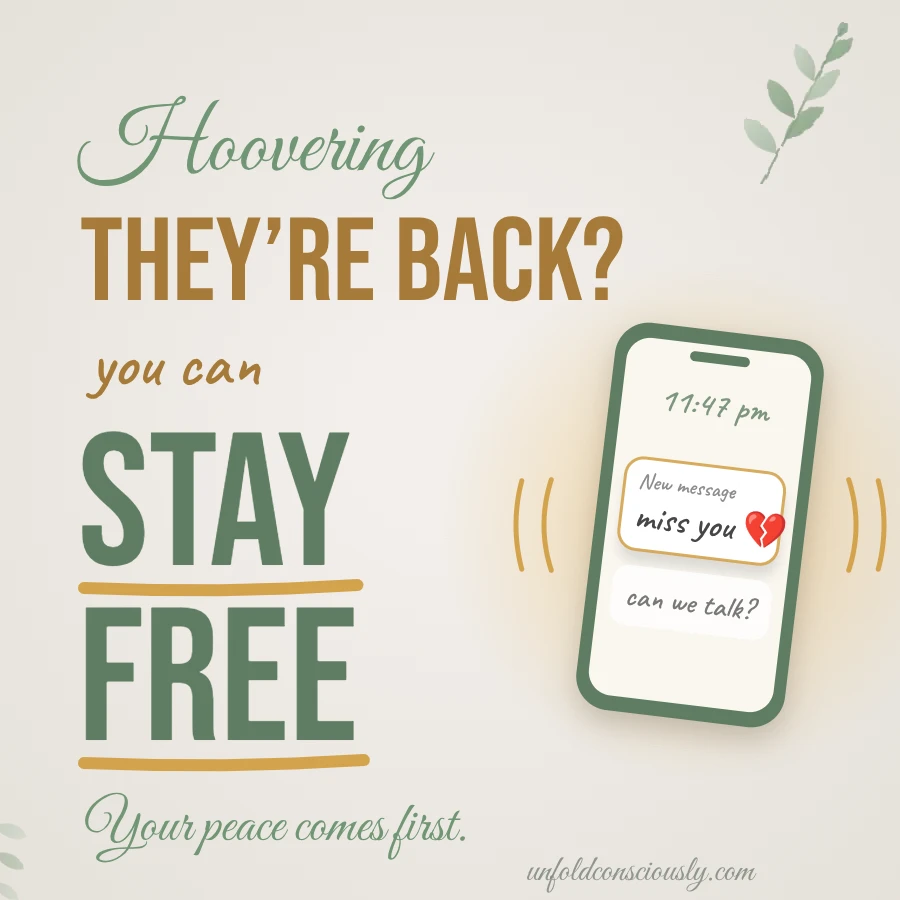
The short answer: hoovering is when someone who hurt you tries to pull you back into the relationship after you’ve stepped away. The name comes from the Hoover vacuum cleaner, because it can feel like being sucked back in. It often looks like sudden apologies, sweet messages, “emergencies” or promises to change, and it usually stops once they have your attention again.
If you’ve left a painful relationship and they keep finding ways to reach you, you’re not imagining it. Maybe it’s a “miss you” text out of nowhere, a birthday message, or a friend passing on how sorry they are.
These moments can stir up hope, guilt and old longing all at once. This page explains what hoovering is, how to spot it, and simple ways to protect your peace.
What Does Hoovering Mean?
Hoovering is a pattern of reaching out to pull someone back after a breakup, a fight or a period of no contact. Cleveland Clinic describes it as a manipulation tactic used to regain control and keep a hurtful cycle going.
Hoovering is an everyday term (not a medical diagnosis) for something many people go through after leaving someone who was controlling, cold or unkind. It often follows the same cycle as love bombing: warmth, then hurt, then warmth again.
Not every message from an ex is hoovering. The difference is what happens next. With hoovering, the kindness doesn’t last, and the old hurt comes back once you return.
Signs You’re Being Hoovered
You might notice one of these or several at once:
- Sudden, intense messages: “I can’t stop thinking about you” after weeks or months of silence.
- Apologies that don’t go deep: sorry for “how you felt,” with no real change or responsibility.
- Big promises: therapy, marriage, a fresh start, the future you once wanted.
- “Accidental” contact: a text “sent to the wrong person,” a like on an old photo, showing up where they know you’ll be.
- Messages through other people: friends or family saying how much they miss you.
- A sudden crisis: an illness, an emergency or a hard time that only you can help with.
- Acting like nothing happened: a casual “Hey, how are you?” as if the hurt never happened.
- Gifts or special dates: a present on your birthday, or a message on an anniversary.
- Guilt or blame: “After everything I did for you,” or “You’re giving up on us.”
Hoovering Examples
Here are some simple examples of what hoovering can look like:
- Three weeks after the breakup: “I saw our song on the radio and cried. I know I messed up. Can we talk?”
- After you stop replying: “Sorry, that was meant for my sister. Hope you’re well though.”
- Through a friend: “He’s in a really bad way. He keeps asking about you.”
- On your birthday: a bouquet arrives with a card that says “I’ll never stop loving you.”
- After you set a boundary: “I’m in hospital. I just needed to hear your voice.”
- Months later, out of nowhere: “Hey stranger! Coffee sometime?”
Each one is designed to get a reply. Once you answer, the warmth often fades fast.
Why Hoovering Pulls You Back
If you feel the pull, there’s nothing wrong with you. Hoovering works because it touches real feelings:
- Hope: part of you still wants the kind version of them to be real.
- Missing the good times: the sweet moments were real to you, even if they didn’t last.
- Guilt: you’re a caring person, and a “crisis” or a sad message can make you feel responsible.
- A trauma bond: when hurt and kindness come in waves, the body can form a strong bond. Our guide to trauma bonding explains this.
- Mixed rewards: never knowing when the kindness will come keeps you hooked. This is called intermittent reinforcement.
Why Do People Hoover?
People who hoover are often looking for control, attention or comfort for themselves. Common reasons include:
- They don’t like losing control, or losing you to someone else.
- They miss the attention, care or comfort you gave them.
- They feel lonely, bored or rejected by someone new.
- They want to protect their image with friends and family.
- They fear being alone.
None of these reasons are about your needs. That’s why the change rarely lasts.
How to Respond to Hoovering
You don’t owe anyone a reply. Pick what feels safest for you:
- Pause before you answer. You don’t need to reply right away, or at all. Take a few slow breaths and notice how your body feels.
- Go no contact if you can. Mute or block their number and social media accounts. It’s a kind way to give yourself space to heal.
- Keep replies short and calm. If you have to stay in touch (for example, about children or work), stick to facts: “Got it. Pick-up is at 5.”
- Tell your friends and family. Let them know not to pass on messages.
- Check the “crisis.” If they say there’s an emergency, you can point them to someone else who can help, or to emergency services.
- Keep a record. Save messages and note the dates, especially if contact feels frightening.
- Remind yourself why you left. Write a short list of what hurt you and keep it on your phone for when the pull feels strong.
If messages turn into threats, following you, or showing up at your home or work, you deserve support. A local domestic abuse service or helpline can talk through your options, and in an emergency you can call your local emergency number.
How to Stay Free and Heal
Leaving is one step. Staying free can take time, and that’s normal.
- Expect waves of missing them. Missing someone doesn’t mean you should go back.
- Calm your body first. When a message arrives, place a hand on your chest and breathe out slowly before you decide anything.
- Lean on safe people. Spend time with friends who make you feel calm and seen.
- Practice boundaries. Our page on saying no has simple words you can use.
- Be kind to yourself if you went back before. Many people return a few times before they leave for good. Each time teaches you something.
- Notice old patterns. If a message brings back fear or shame from long ago, our guide to emotional flashbacks can help.
Hoovering vs Love Bombing vs Breadcrumbing
These patterns often show up together:
- Love bombing: intense affection at the start, or when they want you back.
- Hoovering: any attempt to pull you back after you’ve stepped away. Love bombing is often part of it.
- Breadcrumbing: small bits of attention to keep you interested, with no real commitment. Read more in our guide to breadcrumbing.
Want a 30-day journal to walk with you?
After a Toxic Relationship: A 30-Day Healing Journal has 40 printable pages for when you miss them, doubt yourself, and want to feel safe again. Pay what you can, from $5.
Things That Can Support You
Links to Amazon, Audible and Bookshop.org support this site at no cost to you. As an Amazon Associate I earn from qualifying purchases.
Should I Stay or Should I Go? by Ramani Durvasula: A clear, caring guide to spotting narcissistic patterns and deciding what is right for you.
How it may help: If they keep promising to change, it helps you look at the pattern clearly and decide in your own time.
Prefer paper? Amazon or Bookshop.org, which supports local bookshops
The Betrayal Bond by Patrick Carnes: The classic book on trauma bonds, with practical steps for breaking free.
How it may help: If you keep feeling pulled back to someone who hurts you, it explains why the pull is so strong and how to loosen it. It’s a deeper read, so take it a chapter at a time.
Prefer paper? Amazon or Bookshop.org, which supports local bookshops
The Better Boundaries Workbook by Sharon Martin: Simple exercises to help you say no and protect your time and energy.
How it may help: Its worksheets help you find the words to hold no contact or limited contact, and cope with the guilt that can follow.
Prefer paper? Amazon or Bookshop.org, which supports local bookshops
FAQs About Hoovering
What is hoovering in a relationship?
Hoovering is when someone tries to pull you back into a relationship after you’ve stepped away, often with apologies, sweet messages, promises or a sudden crisis.
Why is it called hoovering?
It’s named after the Hoover vacuum cleaner, because it can feel like being sucked back into the relationship.
How long does hoovering last?
It’s different for everyone. It often comes in waves, such as on birthdays, holidays or when they feel lonely, and usually fades when they get no response.
Should I respond to hoovering?
You don’t have to. Many people find no contact the easiest way to heal. If you must stay in touch, keep replies short, calm and about practical things.
Is hoovering a red flag?
Yes. Kind words followed by the same hurt are a sign the pattern hasn’t changed. Real change shows up as steady actions over time.