
Updated November 1, 2026
The short answer: emotional flashbacks are sudden waves of old feelings, like fear, shame or deep sadness, that come from past trauma, often from childhood. Unlike the flashbacks people picture, there’s usually no clear memory or image, just the feeling. They can be eased by naming what’s happening, grounding in your body, and reminding yourself that you’re safe now.
Has a small moment ever knocked you off your feet? A short text, a tone of voice, a plan that changed, and suddenly you feel tiny, scared or ashamed, far more than the moment seems to call for.
If so, you may be having emotional flashbacks. They’re common for people who grew up with neglect, criticism or emotional abuse. This guide explains what they are, shows clear everyday examples, and gives you simple steps to come back to the present.
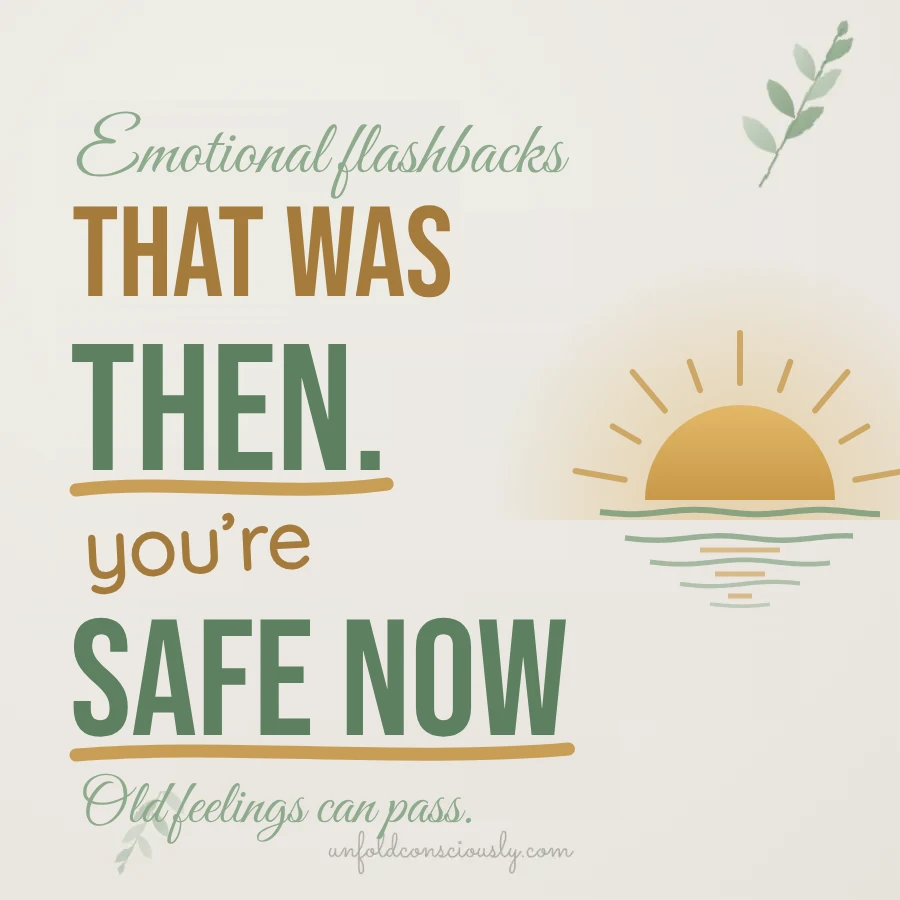
What Are Emotional Flashbacks?
The term was coined by therapist Pete Walker, who writes about it in his book Complex PTSD: From Surviving to Thriving (2013). He describes emotional flashbacks as moments when you’re pulled back into the feelings you had as a frightened, helpless child.
The feelings are real and strong, but they belong to the past. Your body reacts as if the old danger is happening again, even when you’re safe.
Emotional flashbacks are one of the most common signs of complex PTSD (CPTSD), which the World Health Organization now recognises in its international list of conditions (ICD-11). You can learn more in our guide to CPTSD and complex trauma.
How They Differ From Other Flashbacks
- A “classic” PTSD flashback often brings back pictures, sounds or a sense of reliving a specific event.
- An emotional flashback usually brings back only the feelings. You might not know where they come from at all.
That’s why emotional flashbacks are easy to miss. Many people think they’re overreacting or “too sensitive.” Often, an old wound has simply been touched.
Signs You’re Having an Emotional Flashback
You might notice:
- Feelings that seem too big for what just happened.
- Feeling very young or small, as if you’re a child again.
- A sudden flood of shame, fear, panic or hopelessness.
- A harsh inner voice telling you you’re useless, unlovable or in trouble.
- An urge to hide, please or apologise to make things okay.
- Body signs, like a racing heart, a tight throat, a heavy chest or feeling numb.
- Losing your words or feeling frozen.
- A sense that this feeling will last forever.
Everyday Examples of Emotional Flashbacks
Emotional flashbacks often start with something small. Here are some common examples:
- A slow reply. A friend takes hours to text back, and suddenly you feel unwanted and alone, like a child waiting for someone who never came.
- “Can we talk later?” Your manager sends this message and your stomach drops. You feel sure you’re in serious trouble.
- A raised voice. Someone shouts in the next room about something that has nothing to do with you, and you freeze.
- A small mistake. You forget to reply to an email and feel crushing shame, as if you are the mistake.
- A partner seems distant. They’re tired after work, but panic floods in that they’re about to leave you.
- Being left out. You see photos of a get-together you weren’t invited to and feel completely alone in the world.
- Family visits. After a holiday with family, you feel small, tense and hopeless for days.
In each one, the present moment is the trigger, but the size of the feeling comes from the past.
Why Emotional Flashbacks Happen
When a child grows up feeling unsafe, criticised or ignored, their body learns to stay on high alert. As adults, that alarm can still go off when something looks or feels like the old danger, even a little.
This links closely with the freeze and fawn responses, where the body shuts down or tries to please to stay safe. Your body was doing its best to protect you. Healing means teaching it, slowly, that it’s safe now.
How to Cope With an Emotional Flashback: 10 Simple Steps
These steps are based on Pete Walker’s well-known “13 steps for managing flashbacks,” made shorter and simpler. You don’t need to do them all. Pick one or two that help.
In a flashback right now? Our free Come Back to Now helper walks you through these steps one screen at a time, with a breathing circle to follow.
- 1. Name it. Say to yourself: “I’m having a flashback.” Just naming it can bring a little space.
- 2. Remind yourself you’re safe. Try: “I feel afraid, but I’m not in danger. I’m safe right now.”
- 3. Remember you’re an adult now. Look at your hands. Say your age and today’s date. You have choices, skills and support you didn’t have as a child.
- 4. Ground yourself in your body. Feel your feet on the floor. Breathe in slowly and breathe out even more slowly. Name 5 things you can see and 4 things you can hear.
- 5. Speak kindly to the younger you. Put a hand on your heart and say: “You’re safe with me. I’m here now.”
- 6. Remember it will pass. Flashbacks feel endless, but they always end. This one will too.
- 7. Talk back to the inner critic. When the harsh voice starts, answer it: “That’s an old voice. I’m doing my best.”
- 8. Let the feelings move. It’s okay to cry, write it down or shake out your body. Feelings that move tend to pass more quickly.
- 9. Reach out to someone safe. A short message to a kind friend can help: “Having a hard moment, could you check in?”
- 10. Notice the trigger afterwards. Once you feel calmer, ask yourself: “What set this off?” Over time, you’ll start to see patterns.
A 60-Second Reset for Hard Moments
Save this somewhere easy to find, like your phone:
- Feet on the floor.
- One slow breath in, a longer breath out.
- “This is a flashback. I’m safe now. It will pass.”
- Hand on your heart.
- One kind thing I can do next: a glass of water, a walk, a warm drink.
If your body still feels on edge, our page on grounding practices for your nervous system has more easy ways to settle. And if you sometimes feel far away or numb during a flashback, our guide on how to get out of dissociation can help.
Healing Over Time
Emotional flashbacks usually become less frequent and less intense with time and support. Things that help many people:
- Working with a trauma-informed therapist, especially one who understands complex trauma.
- Learning your triggers so you can plan ahead for hard situations.
- Building self-compassion, so the inner critic slowly loses its power. Our guide to rebuilding self-worth shares simple ways to start.
- Daily calming practices, like slow breathing, light movement and time in nature.
- Safe relationships, where you can be yourself without fear.
If you’re not sure whether complex trauma is part of your story, our free complex PTSD test is a short, private self-check.
Free, confidential helplines in every country: findahelpline.com
Books That Can Help
Links to Amazon, Audible and Bookshop.org support this site at no cost to you. As an Amazon Associate I earn from qualifying purchases.
Complex PTSD: From Surviving to Thriving by Pete Walker. A warm, plain-language guide to CPTSD, with practical steps for emotional flashbacks, the inner critic and boundaries. Many readers feel deeply seen here.
How it may help: Written by a therapist who healed from his own childhood trauma, it gives clear tools for emotional flashbacks and a harsh inner critic. Many readers say it was the first book that described what they live with.
Prefer paper? Amazon or Bookshop.org, which supports local bookshops
The Body Keeps the Score by Bessel van der Kolk. Explains how trauma lives in the body and the many ways people heal. It is a long read, so take it slowly.
How it may help: If you’ve wondered why your body still reacts long after the danger has passed, this book explains it, and shares the many ways people have found relief, from yoga to therapy. It includes some hard stories, so go slowly.
Prefer paper? Amazon or Bookshop.org, which supports local bookshops
Emotional Flashbacks FAQ
What is an emotional flashback?
An emotional flashback is a sudden return of strong feelings from past trauma, like fear, shame or despair, usually without a clear memory or image. The feelings belong to the past, but they feel like they’re happening now.
What triggers emotional flashbacks?
Small things that remind your body of old hurt: a tone of voice, criticism, being ignored or left out, conflict, or feeling out of control. Triggers are different for everyone.
How long do emotional flashbacks last?
It varies. Some last a few minutes, while others can linger for hours or even days. Naming the flashback and grounding yourself can help it pass sooner.
Is an emotional flashback the same as a panic attack?
Not quite. A panic attack is a sudden rush of fear with strong body symptoms, like a racing heart. An emotional flashback can include panic, but it’s often more about old feelings like shame, abandonment or feeling small.
Can you have emotional flashbacks without CPTSD?
Yes. Many people who went through hard or painful experiences, especially in childhood, have emotional flashbacks, whether or not they have a CPTSD diagnosis.
How do I stop emotional flashbacks?
You can’t always stop them from starting, but you can help them pass. Name it, remind yourself you’re safe, ground in your body, and speak kindly to yourself. Over time, therapy and self-compassion can make them less frequent.