
Depression can feel like carrying a weight no one else sees. While crystals aren’t a substitute for therapy or medical care, many sensitive souls find them comforting companions for emotional support, especially when paired with nervous system healing or somatic practices. The best crystals for depression are
As someone who’s spent years navigating emotional numbness and heaviness, I know how small rituals (like working with crystals) can create meaningful shifts, especially on the hardest days.
| Crystal | Best for | Where |
|---|---|---|
| Amethyst | Calming Anxiety, Overthinking & Insomnia | Amazon |
| Rose Quartz | Self-worth & Heartache | Amazon |
| Black Tourmaline | Blocking Negativity & Protection from Heavy Energy | Amazon |
| Citrine | Boosting Energy & Motivation | Amazon |
Below, you’ll find my carefully chosen top 4 crystals for depression, each with a little background, a spiritual view, and simple ways to use them.
If you’re struggling and need someone to talk to, you can call or text 988 (US) or visit findahelpline.com.
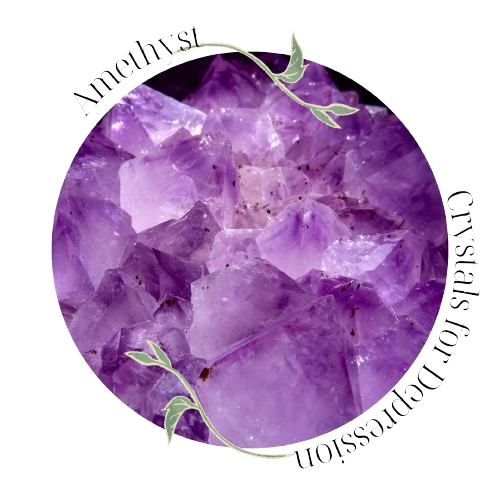
1. Amethyst: For Anxiety + Overthinking
A Little Background:
Amethyst has been treasured as a calming stone for centuries. Its soft purple is a color many people find soothing, and some small studies suggest calming colors and light can help the body relax.
Spiritual Perspective:
- Softens repetitive, critical thoughts
- Supports deeper rest (which is vital for mood recovery)
How to Use:
- Place under your pillow to support sleep
- Hold during grounding or breathing practices
- Keep on your desk when you feel tension building
Personal Mini-Story:
I keep a small amethyst on my desk for moments when my mind won’t settle. It’s a small reminder to pause, breathe, and soften my body.
Some links on this page go to Amazon. If you buy through them, it supports this site at no extra cost to you. As an Amazon Associate I earn from qualifying purchases.
→ Amethyst is available on Amazon
2. Rose Quartz: For Self-Love + Heart Healing
A Little Background:
Rose quartz has long been known as the stone of the heart. Holding something smooth in your hand is a simple way to slow down, and slow, soothing touch can help the body shift toward rest.
Why It’s Supportive: Depression often carries undertones of shame and loneliness. Rose quartz helps soften these edges, reminding you: you are worthy of care.
Pair It With:
- Inner child work or self-compassion exercises
- A simple ritual: Hold it over your heart and whisper, “I am allowed to feel joy.”
Personal Mini-Story:
When my heart felt especially heavy, I’d hold rose quartz to my chest and breathe. The soft, cool weight helped me feel present, even for just a moment. I love short practices because I feel pressure very quickly and fall into a ‘not enough’ trap easily so when I say ‘just for moment’, I literally mean it.
→ Rose Quartz is available on Amazon
3. Black Tourmaline: For Protection + Heavy Energy
A Little Background:
Black tourmaline is one of the most loved grounding stones. Many people say they feel calmer, steadier and more protected when they hold or wear it, especially on heavy days.
Best For: Highly Sensitive people, or anyone feeling surrounded by negativity.
How to Use:
- Wear it as jewelry or place it near doors/windows.
- Combine it with boundary-setting practices.
Personal Mini-Story:
Whenever I feel overwhelmed by others’ emotions, I slip black tourmaline in my pocket as a quiet signal to myself that I’m allowed to protect my space.
→ Black Tourmaline is available on Amazon
4. Citrine: For Energy + Motivation
A Little Background:
Citrine is often called the stone of sunshine. Its warm golden color feels uplifting to many people, and bright, warm colors are often linked with energy and optimism.
Hidden Truth: Fatigue is a quiet companion of depression, making daily life feel heavy. Citrine is often called “sunshine in a stone”, many find it lifts their spirits and helps restore hope.
Try:
- Use when you’re struggling to get out of bed, or to take the next small step
- Place on your solar plexus (upper abdomen) during intention-setting
- Keep on your workspace for a boost of clarity or motivation
Personal Mini-Story:
On hard mornings, I hold citrine in my palm as sunlight pours in. Its warm color helps me imagine hope returning, even if just for the next breath.
→ Citrine is available on Amazon
1. Which crystal is good for depression?
Several crystals are known for their uplifting support during times of depression, but amethyst and rose quartz are two of the most widely recommended.
Amethyst soothes anxious thoughts, encourages rest, and helps calm a restless mind, making it especially helpful if depression comes with overthinking or sleep struggles.
Rose quartz supports self-worth and emotional healing, offering a small reminder that you are worthy of care, even on hard days.
Remember: Crystals are companions. Choose one that “calls” to you, and let your relationship with it unfold naturally.
2. What crystal makes you happier?
Citrine is often called the “sunshine stone” because its bright, golden energy is linked to joy, optimism, and increased motivation.
Many people keep citrine in their workspace or carry it in a pocket to encourage positivity, hope, and confidence, especially during low or heavy times. While no stone can replace support or treatment, citrine can serve as a small daily reminder that happiness and hope are always possible, even in tiny moments.
3. What crystal is an anti depressant?
While no crystal is a substitute for professional help, lepidolite is sometimes nicknamed the “natural anti-depressant stone.”
Lepidolite is loved for its calm, steadying feel. Many use it to soothe emotional turbulence and support a sense of inner peace.
If you’re feeling anxious, overwhelmed, or caught in emotional storms, try holding lepidolite during meditation or keeping it by your bedside.
4. What crystal helps with negative thoughts?
Black tourmaline is widely recognized for its ability to “absorb” or neutralize negative energy and thought patterns.
If you find yourself caught in cycles of self-criticism or negativity, try carrying black tourmaline or placing it near your workspace or front door. Many sensitive people find it helps them feel less “weighed down” by internal or external negativity, supporting clearer and more compassionate thinking.
5. Which chakra is associated with depression?
The chakra most often linked with depression is the heart chakra (Anahata): the center of love, connection, and self-worth.
When the heart chakra feels blocked or wounded (due to loss, loneliness, or old emotional pain), sadness and numbness can linger.
Rose quartz and green aventurine are especially supportive for heart healing, inviting gentleness and a renewed sense of being worthy of love and belonging.
Depression can also relate to the solar plexus chakra (personal power, hope, and motivation), here, stones like citrine can help.
More Stones That Can Help
If the four stones above don’t feel quite right, these three are also often chosen for low days:
Lepidolite: Soothing Overwhelm
Lepidolite is loved as a calming stone that may ease emotional storms, offering a sense of soft containment when feelings threaten to overflow.
Smoky Quartz: Grounding Heavy Emotions
Smoky quartz helps tether emotional heaviness to the earth, providing steady support through low or overwhelming periods.
Black Onyx: Holding Strength Through Shadow
Black onyx is often associated with resilience and emotional endurance, providing a quiet anchor during the long tides of sadness. This can be especially meaningful when moving through emotions shaped by past experiences that may still live in the body: emotions that may not be fully understood by the mind, yet are still felt deeply within.
How to Use Crystals for Depression: Routines & Tips
When you’re feeling low, even small rituals can feel like too much. That’s why it’s important to let crystal work be simple, no pressure, no perfection. Here are a few soft, supportive ways to welcome these stones into your days:
1. Pocket Companion
Slip a crystal (like black tourmaline or rose quartz) into your pocket. You don’t need to do anything special, just knowing it’s there can be a comfort, like a quiet hand to hold.
2. Under-the-Pillow Ritual
Place amethyst or rose quartz beneath your pillow before sleep. Let the calm presence of the stone be a nightly reminder: you’re held, even in hard moments.
3. Mindful Moments
Hold a crystal in your palm during breathwork, meditation, or while simply taking a pause. Let its texture and temperature draw you back to your body. Even a minute counts.
4. Affirmation Pairing
While holding your chosen crystal, repeat a phrase (out loud or silently), such as “It’s safe to soften,” or “I allow myself small comforts.” This creates a mini-ritual that pairs touch with new, kind messages for your nervous system.
5. Visual Anchor
Keep your favorite stone in a spot you see daily, by your bed, near your toothbrush, or beside your phone charger. Let it act as a visual cue to pause, breathe, or check in with yourself.
Remember:
You don’t need to “believe” in crystals perfectly, or do everything “right,” for them to be supportive. What matters is the invitation to slow down, reconnect, and offer yourself small moments of care, especially on the days that feel heavy.
Crystals for Depression: Your Questions Answered
Do crystals really help with depression?
They’re tools, not cures. Think of them like a warm cup of tea for your spirit: supportive, but not a replacement for professional help.
How soon will I feel a difference?
Some feel subtle shifts right away; others notice changes with steady use, like building a sense of safety. Try 2–3 minutes a day and trust your pace.
What if I can’t afford crystals?
Try a free alternative:
- Sit in sunlight (nature’s “citrine”)
- Rest your hand on your heart and breathe
- Use a pebble or other natural object with intention
Do I need all of these crystals?
Not at all. Begin with one that “calls” to you. It’s your connection, not the quantity, that matters.
Final Tip: Let it Be Simple
You don’t need to do everything at once.
Choose one crystal, hold it during a 1-minute pause, or place it somewhere visible (like near your phone charger). Notice what shifts, however subtly.
Remember: healing isn’t linear, and every small act of care counts.
Your unfolding is already underway, and it’s beautiful.